What Browser Am I Using?
Ever been asked by tech support, "What browser version are you on?" and had no idea where to look? Or maybe a website looks weird and you're not sure if it's you or them.
This tool tells you everything about your current browsing setup instantly. From your browser name and version to your operating system, screen resolution, and cookies status—it's all here. No settings menus to dig through, just the info you need, right now.
💡 From my experience: This is a handy utility for debugging. When a user says 'it doesn't work on my computer', ask them for this info. Often, it's an outdated browser or a specific screen resolution issue. It's also great for checking your own User Agent string to see exactly what data your browser is sending to websites.
What is Browser Information?
When you visit a website, your browser sends a "User-Agent" string that contains information about your browser type, version, operating system, and device. Websites use this to deliver the correct version of the page for your device.
Key Metrics Explained
- User Agent: A text string identifying your browser and OS.
- Screen Resolution: The width and height of your display in pixels.
- Viewport Size: The visible area of the webpage (often smaller than screen resolution due to toolbars).
- Cookies Enabled: Whether your browser allows websites to store small data files.
📝 Example: User Agent String
Mozilla/5.0 (Windows NT 10.0; Win64; x64) AppleWebKit/537.36 (KHTML, like Gecko) Chrome/91.0.4472.124 Safari/537.36
This string tells the server that the user is on Windows 10, using Chrome version 91.
How to Use This Tool
Simply load this page and your browser information appears automatically. No input required – the tool instantly detects and displays all relevant browser and system details.
Information Displayed
- Browser Name & Version: Chrome 120, Firefox 121, Safari 17, etc.
- Operating System: Windows 11, macOS Sonoma, Ubuntu Linux, iOS 17
- Screen Resolution: 1920×1080, 2560×1440, etc.
- Viewport Size: Actual visible browser window dimensions
- Color Depth: Bits per pixel (usually 24-bit or 32-bit)
- Cookies Enabled: Yes/No status
- JavaScript Enabled: Confirmed (since the tool runs on JS)
- Language: Browser's preferred language setting
- User Agent String: Complete technical identifier
Understanding User Agent Strings
Anatomy of a User Agent
User Agent strings contain multiple components:
- Browser Engine: Mozilla/5.0 (historical compatibility)
- Platform: Windows NT 10.0, Macintosh, Linux x86_64
- Rendering Engine: AppleWebKit, Gecko, Blink
- Browser Identity: Chrome/120.0, Firefox/121.0, Safari/17.0
Why "Mozilla/5.0" Appears Everywhere
All modern browsers include "Mozilla/5.0" for historical compatibility. In the 1990s, websites checked for "Mozilla" (Netscape) to serve advanced features. Other browsers added it to avoid being blocked, and it stuck.
Common Use Cases
1. Technical Support
When reporting bugs or issues to support teams, they often need:
- Exact browser version (not just "Chrome" but "Chrome 120.0.6099.129")
- Operating system and version
- Screen resolution for layout issues
- Cookie/JavaScript status for functionality problems
2. Web Development Testing
Developers use browser info to:
- Verify which browser version is being tested
- Check viewport dimensions for responsive design
- Confirm feature support (cookies, localStorage, etc.)
- Debug browser-specific issues
3. Privacy Awareness
See exactly what information your browser shares with every website you visit. This helps you understand your digital fingerprint and privacy exposure.
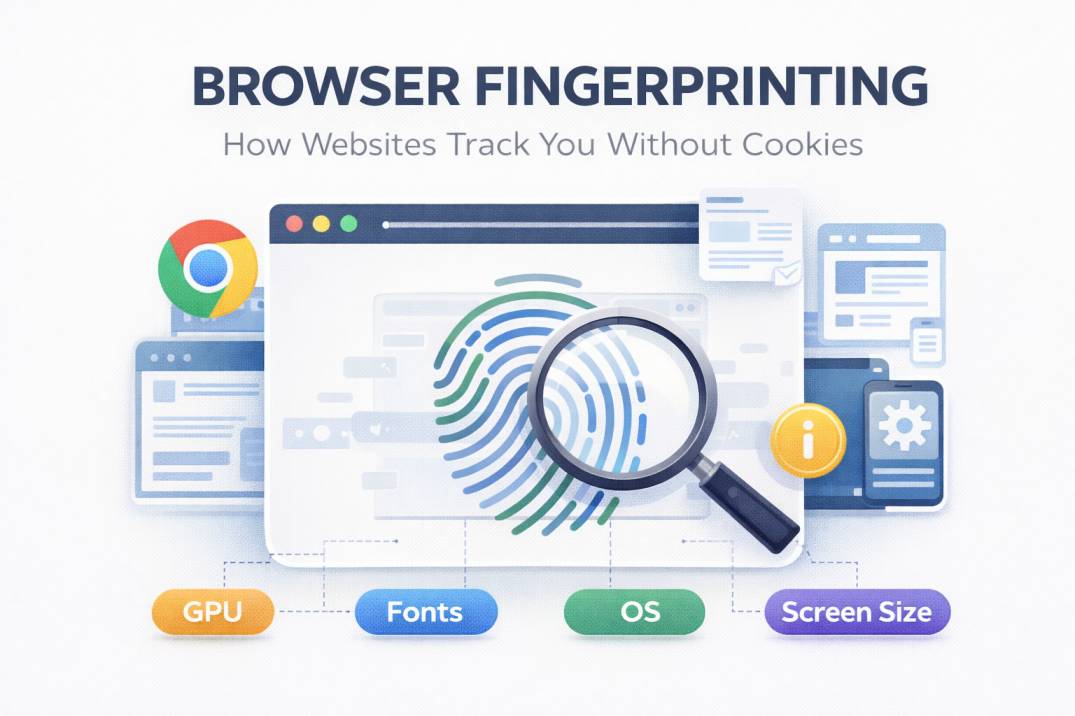
4. Browser Fingerprinting Detection
Websites combine browser info, screen resolution, timezone, fonts, and plugins to create a unique "fingerprint" that can track you across sites even without cookies.
Browser Detection Techniques
User Agent Parsing
The most common method. Websites read the User Agent string to determine browser type and version. However, User Agents can be spoofed or modified.
Feature Detection (Better Approach)
Modern development uses feature detection instead of browser detection:
- Check if
navigator.geolocationexists (location API) - Test for
window.localStorage(storage support) - Verify
document.querySelector(modern DOM methods)
Why Feature Detection Wins
Browser detection breaks when new browsers emerge or versions change. Feature detection checks for actual capabilities, making code future-proof.
Privacy Implications
What Websites Can Track
Every website you visit receives:
- Your User Agent string
- Screen resolution and color depth
- Timezone and language preferences
- Installed fonts (via canvas fingerprinting)
- Browser plugins and extensions (limited in modern browsers)
Browser Fingerprinting
Combining these data points creates a unique identifier. Studies show 80-90% of users have unique browser fingerprints, enabling tracking without cookies.
Protecting Your Privacy
- Use privacy-focused browsers: Brave, Firefox with privacy extensions
- Enable tracking protection: Built into Firefox, Safari, Edge
- Use VPN: Masks IP address (not shown in this tool)
- Disable JavaScript: Extreme but effective (breaks most sites)
- Use Tor Browser: Standardizes fingerprint across users
Troubleshooting with Browser Info
Problem: Website Not Working
Check: Browser version. Many sites require modern browsers.
Solution: Update to the latest browser version.
Problem: Layout Looks Broken
Check: Screen resolution and viewport size.
Solution: Site may not be responsive. Try different zoom levels or report to site owner.
Problem: Can't Login or Save Settings
Check: Cookies enabled status.
Solution: Enable cookies in browser settings (required for most logins).
Problem: Features Missing
Check: JavaScript enabled (this tool confirms it's on).
Solution: Enable JavaScript or whitelist the site in your blocker.
Browser Comparison
Chrome/Chromium-Based
Browsers: Chrome, Edge, Brave, Opera, Vivaldi
Engine: Blink (V8 JavaScript engine)
Market Share: ~65% globally
Pros: Fast, extensive extension library, developer tools
Cons: High memory usage, Google tracking concerns
Firefox
Engine: Gecko (SpiderMonkey JavaScript engine)
Market Share: ~3-5%
Pros: Privacy-focused, open-source, customizable
Cons: Slower than Chrome on some benchmarks
Safari
Engine: WebKit (JavaScriptCore engine)
Market Share: ~20% (dominant on iOS/macOS)
Pros: Energy-efficient, tight Apple ecosystem integration
Cons: Slower to adopt new web standards, iOS-only on mobile
Screen Resolution vs Viewport
Screen Resolution
Total pixels on your physical display. Common resolutions:
- 1920×1080 (Full HD): Standard desktop monitor
- 2560×1440 (2K): High-end desktop
- 3840×2160 (4K): Ultra HD monitors
- 1366×768: Common laptop resolution
Viewport Size
Actual visible browser window area. Smaller than screen resolution because of:
- Browser toolbars and address bar
- Operating system taskbar/dock
- Browser sidebar (bookmarks, extensions)
- Window not maximized
Why It Matters for Web Design
Responsive design uses viewport size, not screen resolution. A 1920px wide screen might have a 1600px viewport if the window isn't maximized.
Advanced Browser Detection
Device Type Detection
Websites infer device type from User Agent:
- Desktop: Windows, macOS, Linux in User Agent
- Mobile: iPhone, Android, Mobile Safari
- Tablet: iPad, Android tablet (harder to distinguish)
Bot Detection
Bots and crawlers have distinct User Agents:
- Googlebot: Mozilla/5.0 (compatible; Googlebot/2.1; +http://www.google.com/bot.html)
- Bingbot: Mozilla/5.0 (compatible; bingbot/2.0; +http://www.bing.com/bingbot.htm)